
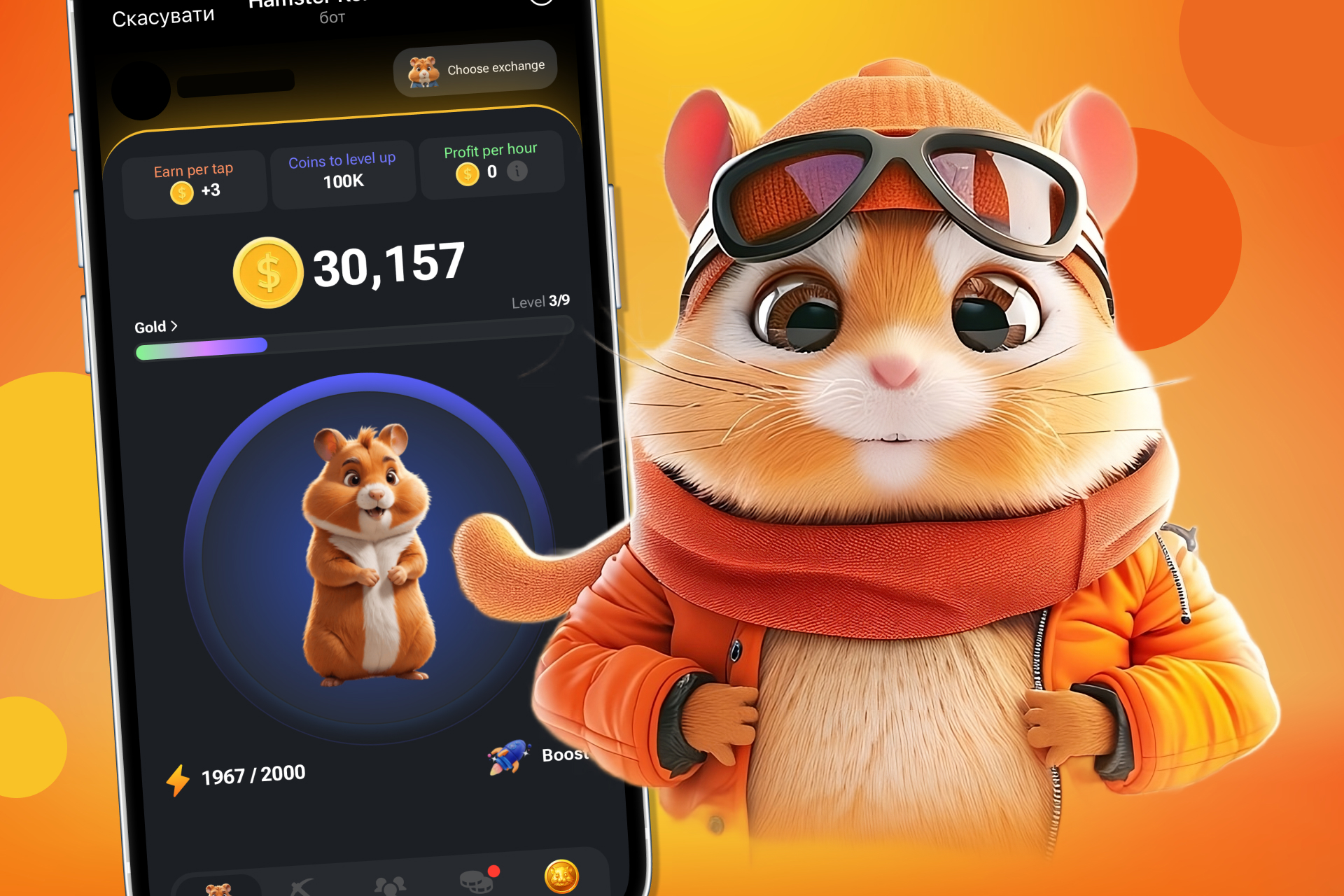
Hamster Kombat, a clicker game that caused a real boom in Telegram, attracted millions of users in a short time. The game’s rudimentary mechanics and the prospect of making quick money have turned it into a viral phenomenon since its launch in March 2024. However, behind the attractive packaging hides a number of issues that have already caused concern among analysts and journalists.
The game, which promises easy earnings and involvement in Web3, has gained popularity very quickly. According to Google Trends, requests for “Hamster Kombat” among Ukrainian users rose to record levels during May, reaching its peak on May 26. That day, the frequency of requests reached 100 points out of the maximum possible, which reflects the enormous interest in the project.
This interest is also reflected in the number of visitors to the Hamster Kombat site: according to Similarweb, in April 2024, more than 143,000 people visited the site. For comparison, in the first month of the project’s operation, this figure was only 7,000 visits.
Statistics from Telegram look even more impressive. The official Hamster Kombat Announcement channel has amassed over 21 million subscribers in less than two months, making it one of the most popular channels in the Telegram world. Such a sharp jump raises logical questions about the origin and veracity of these figures.
Why has Hamster Kombat become so popular?
At first glance, the answer is simple: Hamster Kombat offered basic gameplay and combined it with an economic model that promised quick income to users. The scheme resembles the popular game Notcoin, where players tap on the screen to earn in-game points. However, Hamster Kombat added some variety: instead of the usual “clicks”, players interact with a hamster who acts as the CEO of a crypto exchange, and the points earned can be used to develop your own platform.
This simple and addictive mechanic made the game extremely popular, attracting millions of new users. Just 11 days after its launch, Hamster Kombat had its first million players. According to the developers, at the beginning of June 2024, the game’s user base reached 100 million people.
However, this rapid popularity raises many questions, especially considering the game’s possible ties to Russian companies and investors.
Who is behind the project?
Despite its gigantic user base and phenomenal growth in popularity, Hamster Kombat’s developers remain anonymous, adding to the fog surrounding the project’s origins. Some journalistic investigations, including from CoinDesk, point to a possible link between the game and Russian companies. One such person mentioned in this context is Nikita Anufriev, who, according to LinkedIn, was developing the marketing strategy for Hamster Kombat.
Anufriev, although he lives in the USA, has Russian roots, and his education is connected with Moscow University. He works for the IT company Vinny Software Inc, registered in the state of Delaware, USA. However, the origin of the project and the possible influence of the Russian Federation cause fears among many users.
Additional suspicions are caused by the registration of the game’s domain through the Russian company RU-CENTER, which is based in Moscow and St. Petersburg. It may be just an economic decision, but such cooperation may mean that the developers pay taxes to the Russian budget, which finances the war against Ukraine.
Privacy and Security Issues
One of the key threats associated with Hamster Kombat is the issue of user data privacy. Although the game is gaining popularity due to its integration with Telegram, users should be careful about what data they provide to the developers.
According to Telegram’s official documentation, any developer using Telegram Web Apps (TWA), including Hamster Kombat, has access to certain user information by default. This data includes:
User ID and name
Profile photo
nickname
Language selection for the interface
However, this is only the tip of the iceberg. Apps like Hamster Kombat may also collect other sensitive data, such as users’ phone numbers and locations. This poses serious privacy risks, especially considering that Hamster Kombat has potential ties to companies from the Russian Federation.
According to the legislation of the Russian Federation, companies based in Russia are obliged to store the data of their users on the territory of the country and provide them to state authorities upon request. This means that if Hamster Kombat is indeed developed in Russia, the data of millions of users could fall into the hands of the Russian authorities, who could use this information for nefarious purposes.
The missing White Paper
Another alarming point is the removal of the technical document (white paper), which contained detailed information about the project, from the Hamster Kombat official website. In April 2024, the team published a white paper, where they revealed their vision for the development of the game, as well as provided information about in-game tokens and the business model of the project.
The document was available until the end of May, but it was removed without explanation. This may indicate the desire of the team to hide certain aspects of their activities, which only strengthens suspicions about the transparency of the project.
The removal of the white paper also undermines the credibility of the developers’ promises to introduce in-game tokens. Originally, the Hamster Kombat team stated that players will be able to earn tokens with the ticker HMSTR, which will be used for in-game purchases, participation in events, and PvP battles. However, after the removal of the document, the exact date of the tokens’ launch remains unknown, raising concerns about the realization of these promises.
Dangerous connections and risks
In the absence of specific information about the development team, suspicions about connections with Russian companies dominate. Of particular concern is the fact that the domain registration and marketing strategy may have been carried out with the participation of persons connected to the Russian Federation. If the developers are indeed of Russian origin, Hamster Kombat users should consider the possibility that their personal data may fall into the hands of the Russian authorities.
In addition, there is another threat – financing. If Hamster Kombat is really connected to companies in the Russian Federation, then the use of the game can indirectly support the economy of the country, which spends hundreds of millions of dollars every day on the war against Ukraine. This ethical issue becomes especially important for users from countries that have suffered from Russian aggression.
In-game tokens: big promises and no clear information
One of the key components of Hamster Kombat is the ability to earn in-game tokens. Initially, the development team announced that tokens with the ticker HMSTR will be released in June 2024 and will be the main tool for in-game purchases, participation in online events and PvP battles. However, as with the deleted white paper, the details regarding these tokens remain vague.
Despite the promises of the team, at the time of writing, the exact date of the launch of the tokens has not been named. Moreover, the lack of transparent information about the principle of distribution of these tokens among users raises additional questions. In particular, it is not clear whether the token will be launched via an airdrop, or whether it will need to be purchased or earned exclusively within the game.
Given that in-game tokens are the basis of the project’s business model, the lack of clear information regarding their launch and usage mechanics undermines trust in the developers. It is also worth remembering that most popular Play-to-Earn projects provide detailed instructions for their tokens in the early stages to attract investors and users. In the case of Hamster Kombat, the lack of such transparency could indicate potential risks or reluctance to reveal the team’s true intentions.
Criticism and user complaints
Despite its huge popularity, Hamster Kombat has not escaped criticism from users. One of the main complaints is the technical problems in the game. Some players have reported that earned points disappear after a few minutes of playing or after activating free boosts. This caused outrage among users who lost their progress and were unable to claim their proper rewards.
In addition, many players complain about the lack of effective communication with the development team. The official social networks of the game, in particular the Telegram channel, are mainly used as a platform for advertisements, and not for interaction with users or solving player problems. This approach significantly reduces the level of trust in the project, especially when taking into account the technical malfunctions that regularly occur.
Another aspect of criticism concerns the gameplay itself. Despite its viral popularity and huge user base, some players feel that the game mechanics are too simple and quickly lose their appeal. Although Hamster Kombat is positioned as a game with passive income, this does not always satisfy users who expect a more complex and exciting gameplay.
Conclusion: Is Hamster Kombat Safe?
Hamster Kombat managed to become a viral phenomenon in the world of Web3 games and attracted the attention of millions of users. However, despite its loud start, the game has many problems that make you think about its security and reliability. The lack of transparency regarding the development team, possible ties to Russian companies, and data privacy issues pose serious risks to users.
In addition, technical malfunctions and a lack of adequate user support raise doubts about the long-term viability of the project. Currently, Hamster Kombat looks like another “viral” game that could quickly lose its popularity if transparency, security and gameplay quality issues are not addressed.