
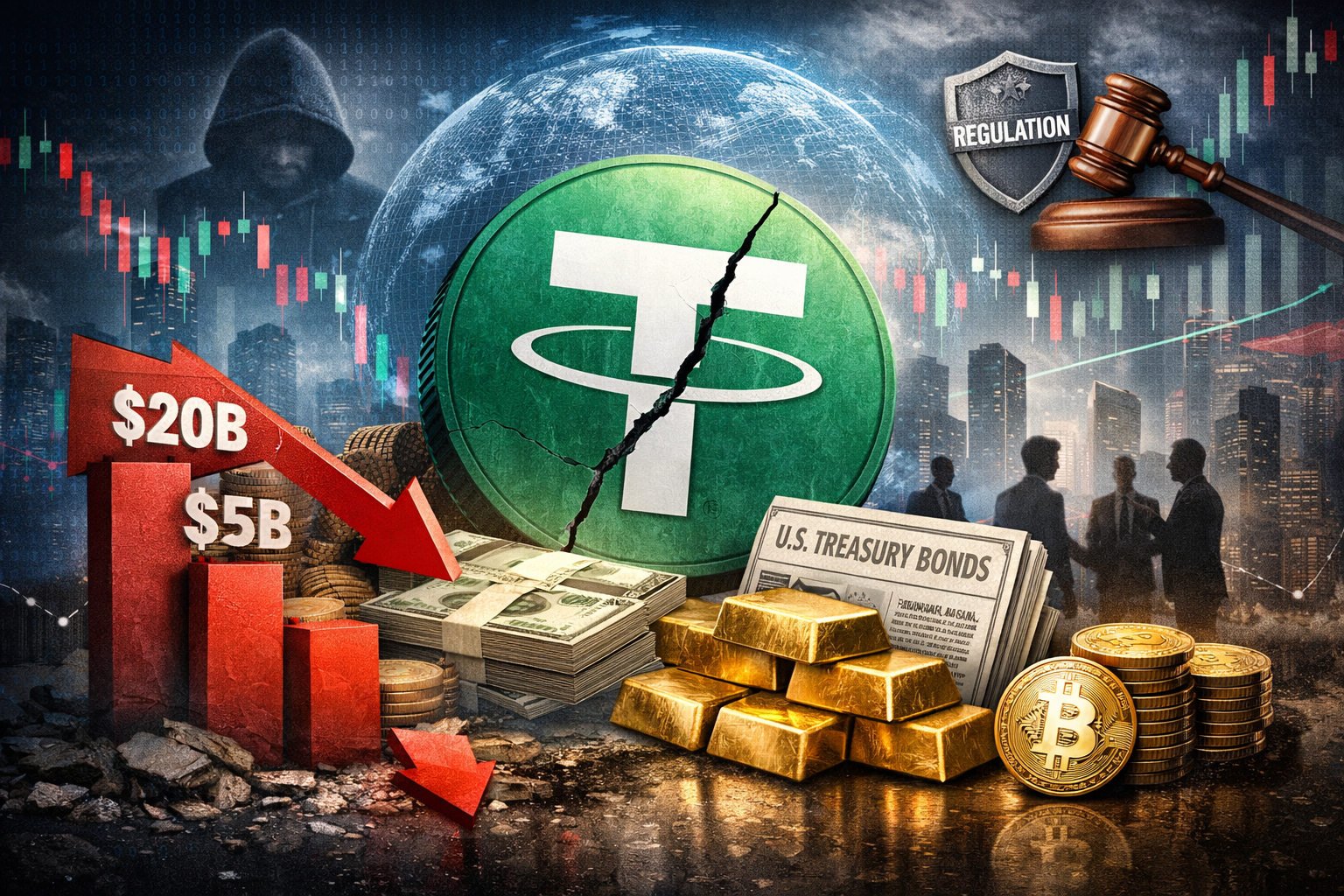
Tether, the world’s largest stablecoin issuer, is being forced to temper its fundraising ambitions. According to sources familiar with the matter, the crypto heavyweight has encountered resistance from investors over a proposed company valuation of $500 billion. The situation was reported by the Financial Times.
From $20 Billion to $5 Billion: A Strategic Pivot
Last year, Tether Group, registered in El Salvador, initiated discussions to raise between $15 billion and $20 billion in fresh capital. Such a deal would have positioned the company among the most valuable privately held firms globally. However, advisors are now reportedly negotiating a far more modest target—around $5 billion.
Tether CEO Paolo Ardoino recently described the earlier $20 billion figure as a misunderstanding. He clarified that it represented the maximum stake the company was willing to sell, rather than a formal objective. Ardoino emphasized that Tether remains highly profitable and does not face urgent capital needs. Instead, any external funding would serve primarily as a strategic move to strengthen partnerships and credibility.
A Bold Comparison to the AI Sector
Ardoino did not shy away from criticizing valuations in other technology sectors, particularly artificial intelligence. He argued that Tether, which generated an estimated $10 billion in net profit last year, deserves a higher valuation than loss-making AI companies receiving massive investor backing.
“Some AI companies are valued at $800 billion while reporting huge losses,” Ardoino remarked. “If investors are comfortable with that, fine. But our business is actually profitable.”
Regulatory and Reputational Challenges
Despite management’s confidence, potential investors remain cautious due to several lingering concerns:
- Regulatory scrutiny. Since 2014, Tether has faced ongoing questions from regulators regarding the transparency of its reserves and the possible use of its token in illicit activities.
- Asset quality. Late last year, S&P Global Ratings downgraded Tether’s reserve rating to its lowest level, citing significant exposure to high-risk assets such as Bitcoin and gold.
- Market volatility. The broader cryptocurrency market has experienced sharp declines over the past six months, prompting investors to retreat from speculative ventures.
A Critical Link Between Crypto and Traditional Finance
Tether remains one of the world’s largest buyers of U.S. Treasury securities and a major player in the gold market. This positions the company as a crucial bridge between conventional finance and the volatile crypto ecosystem.
Ardoino noted that new U.S. legislation on stablecoins, signed by President Donald Trump, has provided fresh momentum. Tether recently launched a new token designed to comply with updated regulatory requirements.
Looking Ahead
While Tether’s 2025 profits fell by roughly 25% compared to the previous year due to a decline in Bitcoin prices, the company partially offset these losses with gains of $8–10 billion from its gold holdings amid rising precious metal prices.
The revised funding strategy reflects a more cautious approach in an increasingly complex financial and regulatory environment. Whether Tether ultimately secures new investment—and at what valuation—will likely set the tone for the broader stablecoin sector in the years ahead.